Gaming · Retrospective
Fun first or earn first: the balance I described in my first interviews as CEO
October 2021 was the month I started answering questions about Playermon in public as its CEO. On 29 October I joined an AMA with Oracles Investment Group on Telegram and opened with the plainest line I could: "I am Jisheng the CEO of Playermon." I also still ran TriveAcademy, the blockchain academy I founded in 2018, and said so: "Personally, I run a Blockchain Academy and have been teaching and incubating blockchain projects."
In that AMA, questions about earning came up more than once: the ways players can earn, and why anyone should hold the tokens. Those are fair questions for a play-to-earn game. They are also the wrong place to start designing one.
The balance
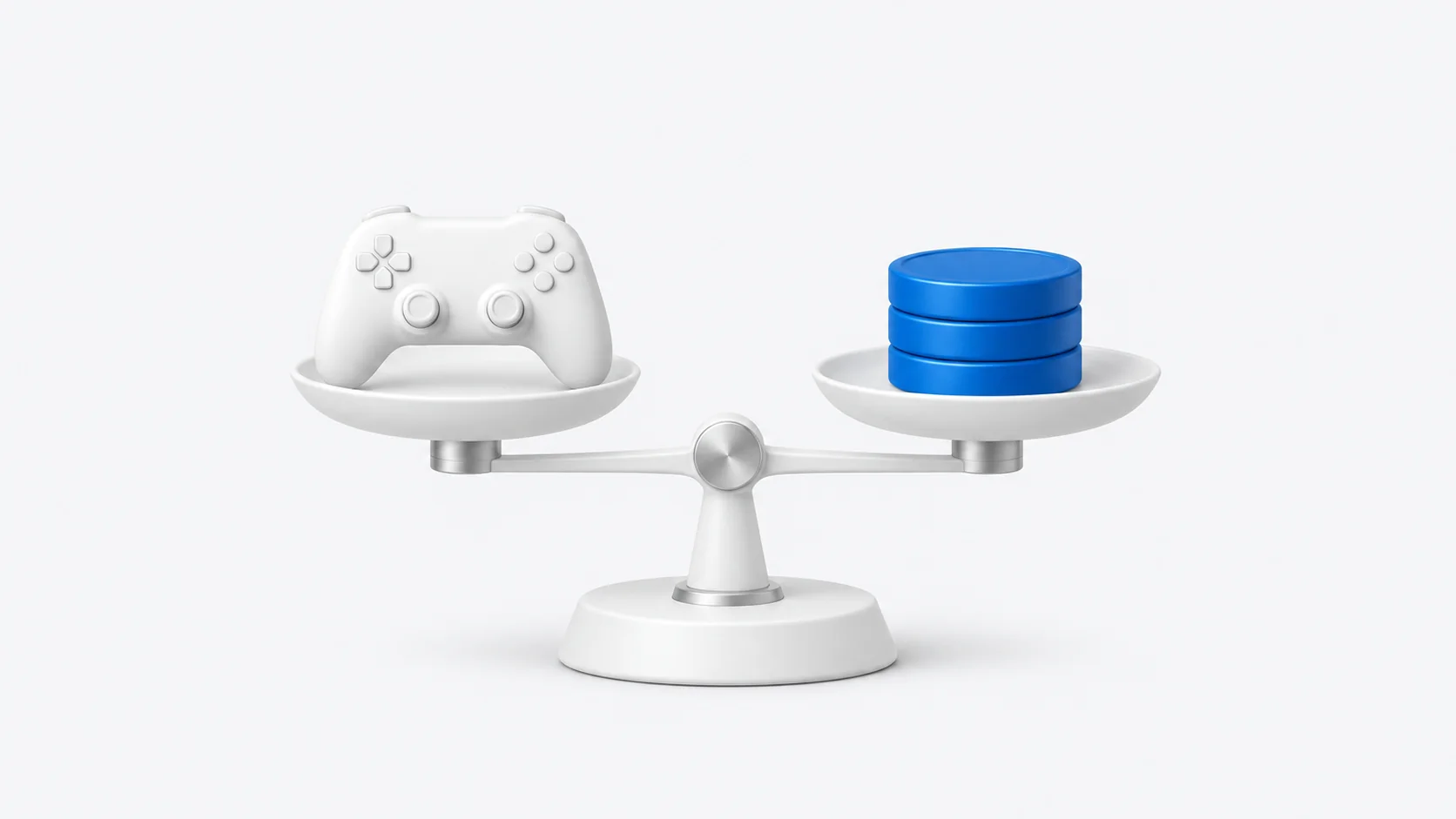
Earlier in the month, our blog quoted a line of mine from an interview: "We try to strike a balance now between having fun and earning." I meant both halves of it.
The rewards in a game economy come from somewhere. Some of the value comes from new players buying in, some from players spending inside the game on upgrades, breeding and items, and some is removed from circulation by design. If the only reason anyone plays is the payout, then every player is also a seller, and the people who stay are the ones still waiting to sell. When rewards fall, they leave, and the rewards fall further.
A game people would play without the token behaves differently. Players spend because they want something in the game, not only because the spending is an investment. Earning still matters a great deal to many players, and play-to-earn has given some of them real income this year. But the earning lasts only as long as there is a game worth spending time and money in.
What we built first
In the AMA I described where the game starts. Playermon would begin with a Tamagotchi-like experience, where a player can feed, play and bathe their Playermons. It would then expand to turn-based card battles: each player forms a team of three Playermons, and their placement can give an advantage over the opponent. Winners earn SGEM, and Playermons gain experience in story mode.
Starting with care rather than combat has a practical side. Caring for a pet is low-stakes and repeatable, and it lets a new player get used to the idea that the creature on screen is an NFT in their own wallet before battles or trades ask more of them. Battles come next, and that is where strategy and skill should decide outcomes.
An earned token needs somewhere to go
We designed the game around two tokens. PYM is the governance token, and it is planned to pay for things like eggs and Playermons. SGEM is what players earn, through quests, missions and defeating opponents, and spend on upgrades, breeding and crafting.
SGEM has an elastic supply, so I described the counterweight in the same answer: a burning mechanism on in-game activities and transactions, to prevent a surplus. An earned token needs places to be spent. Whether those places are enough depends, again, on whether players want what they are spending on. Tokenomics cannot rescue a game nobody enjoys, and that is the reason the fun half of the sentence comes first.
Why Polygon
The care loop is made of small, frequent actions. If every action costs a player a noticeable fee, the loop stops making sense long before any reward arrives. On 7 October we explained why Playermon chose Polygon: "minimal to zero gas fees and instantaneous processing", and a commitment to keeping gas fees insignificant so players are not paying steep transaction costs.
Cheap transactions do not remove the first step, though. A new player still needs a wallet, the Polygon network added to it and a little MATIC for gas. On 26 October we published a guide to setting up MetaMask and adding the Polygon network, because for a first-time player that set-up can be the hardest part of the whole game.
What comes next
The plan I gave at the end of the month was specific. The pre-IDO would open on 3 November, the launchpad IDO would follow in the third week of November, the egg sale would run in the first week of December, and the game would launch after the eggs were revealed, before the end of the year.
Those dates are a commitment to the community, and I intend to treat them as one. But the balance I keep talking about will not be settled in an AMA. It will be settled when people can play the first version and we see whether they come back for the game or only for the reward.