DeFi · Retrospective
After FTX: where a game token actually lives
On 8 November FTX stopped processing customer withdrawals. On 11 November it filed for bankruptcy. People who had left balances on one of the largest exchanges in the industry found that the number on their screen was a claim against a company, and the company could not pay it.
PYM turns one this month. Its token generation event was in late November 2021, and since then it has traded on MEXC, Gate and Bitrue, and on Quickswap on Polygon. A month like this one is a good time to be precise about where a game token actually is.
Three places a token can sit
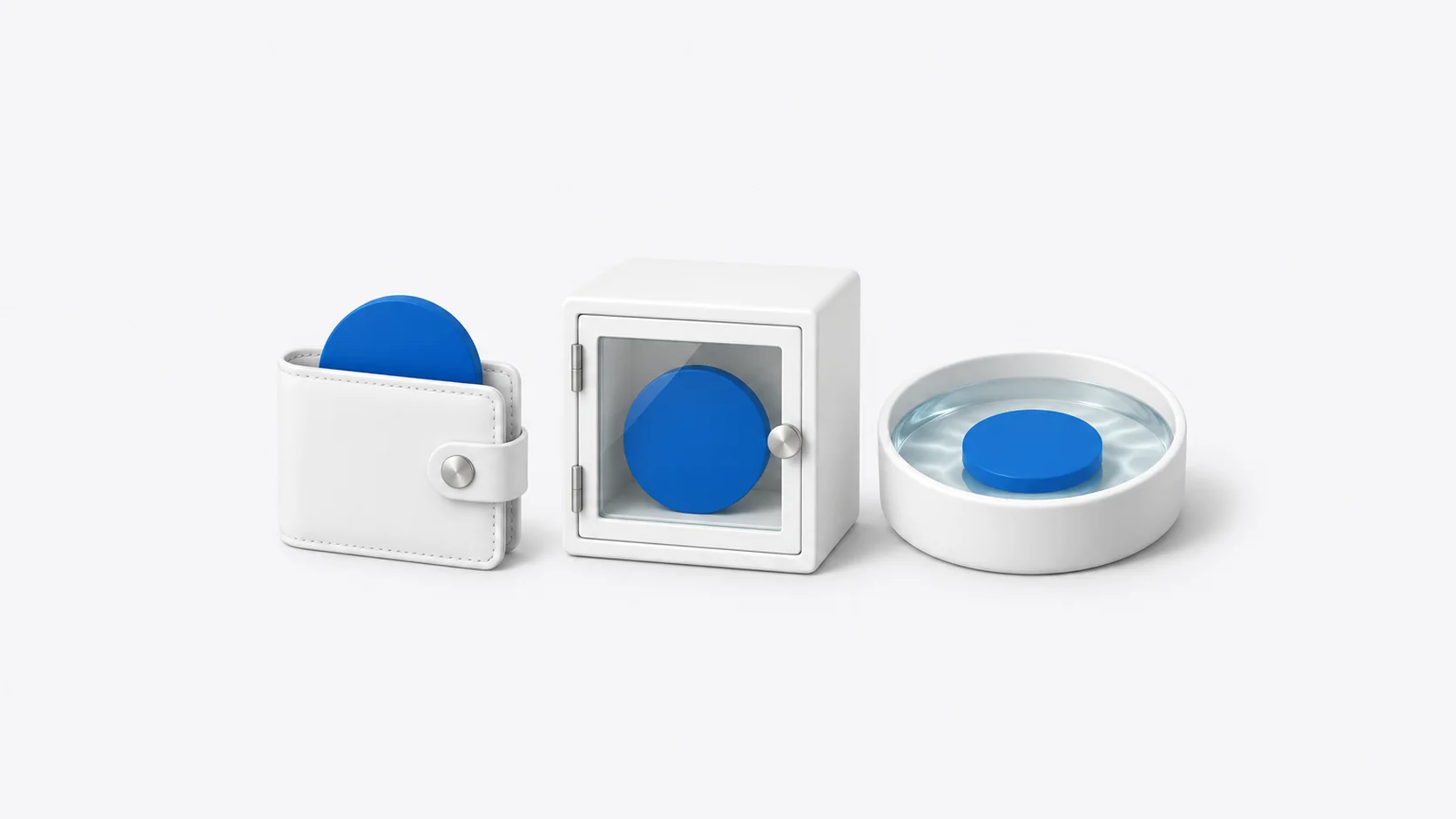
PYM is an ERC-20 token on Polygon. Every PYM that exists is a balance recorded against an address in one contract, and nowhere else. The question is always whose address.
- In a player's own wallet. The contract records the player's address. Whoever holds the key controls the balance. Nobody else can move it, and nobody else can recover it.
- On a centralised exchange. When a player deposits, the contract records the exchange's address, not the player's. What the player holds from then on is a line in the exchange's private database, a promise that the exchange will send PYM back on request. Trades move numbers in that database. The chain only sees deposits and withdrawals.
- In a pool on Quickswap. The tokens sit in a pool contract, and a swap settles from and to the trader's own wallet. Liquidity providers rely on the pool's code rather than on a company's books. Code has its own risks, but they are risks anyone can read.
FTX was a failure of the second kind. Nothing went wrong in the token contracts of the assets people held there. What failed was the promise.
Proof of reserves is a partial answer
In the days after the collapse, several exchanges said they would publish proof of their reserves. That is better than nothing, but it answers a narrower question than it seems to. A snapshot of an exchange's addresses shows what it held at one moment. It does not show what it owed unless liabilities are proved too, and it does not show whether some of the assets were borrowed for the day of the snapshot.
For a holder, the plain test is still the old one. Can you withdraw to an address you control, today?
What the game sees
From the game's side, PYM on an exchange is invisible. Staking is done from a wallet. Our DAO uses snapshot voting weighted by PYM held or staked, so tokens left on an exchange give the person with a claim to them no vote. When the Anchorland alpha paid its leaderboard rewards on 30 September, they went out on Polygon to 50 players' own addresses in a single transaction anyone can look up.
The game was built around the wallet. A token on an exchange can be traded, but it cannot be played with.
What a studio can do
- Publish the facts that let players check things themselves. The official contract, the official channels, and reminders like the one we posted in October: important announcements do not come through comment sections, and nobody should ever give out a seed phrase.
- Teach self-custody. We have published wallet-setup tutorials since September 2021, because many people come to a game before they have ever used a wallet.
- Make the wallet worth using. Staking, voting and rewards that need the token in a player's own wallet are reasons to hold it there.
- Be honest about the cost. Self-custody moves the risk from a company's books to the player's key. If a player loses the seed phrase, we cannot recover the tokens, and no support ticket changes that.
What a studio cannot do
We cannot see inside an exchange's books, let alone audit them. A listing tells a player that a market exists. It says nothing about whether the exchange can return what it holds.
We cannot reach into an exchange's internal ledger to freeze, return or reissue anything. Those balances are not on the chain at all.
And we should not tell players where to keep their savings. That decision is theirs. What we can tell them is where the game's features work, and what each choice depends on.
What I take from this month
The lesson is narrow. A game token's real home is the address that holds it. If that address belongs to the player, the risks are the player's key and the contracts it touches. If it belongs to an exchange, the risk is a company's books, which nobody outside can read. Our job is to make the first option usable and to be clear about the second.
Meanwhile the work on the game went on. Patch V2.4.0 shipped on 21 November with a new main menu and a way to follow and visit the SpaceDens of players on the PvE leaderboard.